
Find Your Flow: How to Choose the Perfect Massage Type for Your Body
- Marut Manorat
- Jul 15
- 5 min read
Walking into a wellness center or booking your very first massage can feel a bit like reading a menu in a foreign language. Swedish? Deep Tissue? Lymphatic Drainage? What do they actually mean, how do they feel, and most importantly which one is going to make you feel like a brand-new human?
Whether you are looking to melt away workday stress, recover from an intense workout, or manage chronic pain, there is a perfect style for you. Let’s break down the most popular types of massage, their fascinating histories, what they feel like, and how to find your perfect match.
1. Swedish Massage: The Ultimate Stress Melter
The Origin: Developed in the early 19th century by Swedish physiologist Per Henrik Ling, this system was designed to promote physical health through movement and circulation.
The Benefit: Designed to calm the nervous system, lower stress hormones (like cortisol), and boost feel-good endorphins. It’s the gold standard for pure relaxation.
Southern California Health Institute.
What It Feels Like: Super relaxing, fluid, and gentle. Your therapist will use long, gliding strokes (effleurage), gentle kneading (petrissage), and tapping on the top layers of muscle.
Best For: First-timers, anyone feeling mentally exhausted, or those who prefer light to medium pressure.
2. Deep Tissue Massage: The Knot Buster
The Origin: While deep tissue work has roots in ancient Egyptian and Chinese medicine, modern deep tissue therapy was popularized in the mid-20th century to target structural posture issues and deep muscle fibers.
The Benefit: Targets the deep layers of muscle and fascia (the connective tissue surrounding muscles). It breaks down stubborn "knots" (adhesions) that limit your range of motion and cause chronic pain.
What It Feels Like: Intense but therapeutic. The therapist uses slow, deliberate, and firm pressure—often utilizing their forearms, knuckles, and elbows—to get deep into muscle fibers. It can feel "good-hurt," and you might feel slightly sore for a day or two after, similar to the feeling after a hard workout.
Best For: People with chronic back or neck pain, repetitive strain injuries, or those who love deep, firm pressure.
3. Thai Massage: The "Lazy Man's Yoga"
The Origin: Developed over 2,500 years ago in India by Shivago Komarparj (a physician to the Buddha), Thai massage combines Ayurvedic principles with traditional Chinese medicine.
The Benefit: Improves flexibility, increases joint mobility, and boosts the flow of "Sen" (energy pathways) throughout the body.
What It Feels Like: Active and energizing! Unlike other massages, you stay fully clothed in loose clothing, and no oils are used. You lie on a comfortable floor mat while the therapist gently moves your body into yoga-like stretches, using their hands, knees, and feet to apply rhythmic compression.
Best For: People who feel stiff from sitting all day, those wanting to improve flexibility, and anyone who prefers to stay clothed.
4. Sports Massage: The Athletic Helper
The Origin: Perfected in the late 20th century to help modern athletes prepare their bodies for peak performance and bounce back faster after events.
The Benefit: Reduces recovery time, prevents athletic injuries, and helps keep muscles pliable and healthy.
What It Feels Like: Highly targeted, dynamic, and varied. It typically combines Swedish strokes, deep tissue compression, trigger point work, and gentle joint stretching. Your therapist will focus on the specific muscle groups you use most for your activities.
Best For: Athletes, weekend warriors, or anyone training for a physical goal.
5. Reflexology: The Foot Pathway to Wellness
The Origin: Evidence of reflexology has been found in ancient Egyptian tomb drawings dating back to 2330 BCE. It was modernized in the West in the early 20th century as "zone therapy."
The Benefit: Relieves stress, improves circulation, and encourages full-body balance by targeting specific reflex points that correspond to your body's organs and nervous system.
What It Feels Like: Deeply soothing. This session focuses strictly on your feet, hands, and ears. The therapist uses precise, thumb-and-finger walking techniques to apply firm pressure to specific spots. You stay fully clothed except for your feet.
Best For: Anyone who wants a deeply relaxing experience without getting a full-body massage, or people who spend all day on their feet.
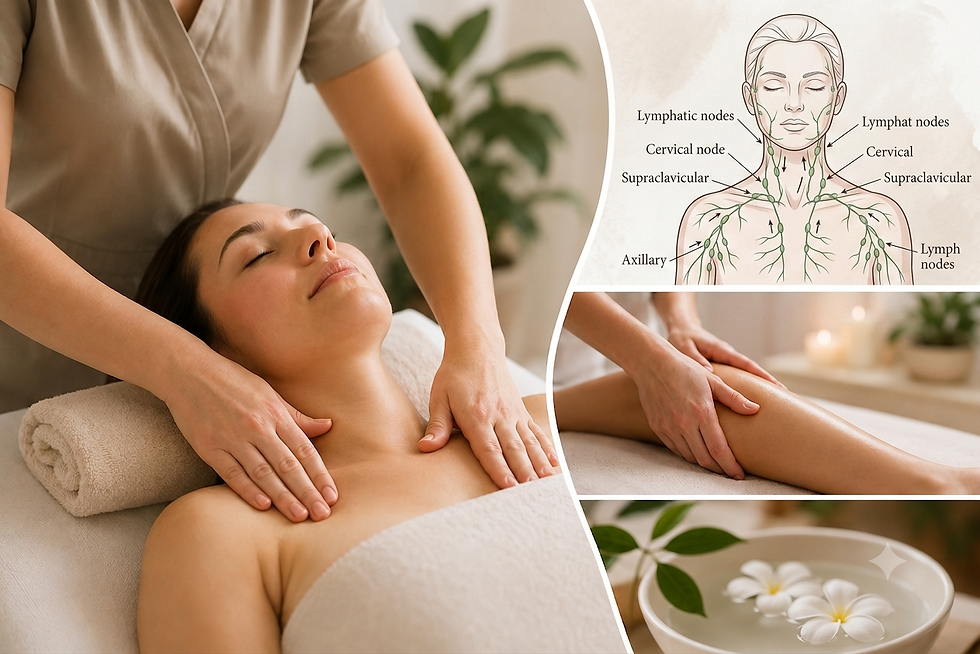
6. Lymphatic Drainage Massage: The Internal Flush
The Origin: Developed in France in the 1930s by Drs. Emil and Estrid Vodder, this clinical technique was designed to treat swollen lymph nodes and chronic immune issues.
The Benefit: Boosts your immune system, reduces swelling (edema), and supports your body's natural detoxification process by gently moving lymph fluid toward the lymph nodes.
What It Feels Like: Incredibly light, rhythmic, and soothing. This is not a deep muscle massage. The therapist uses extremely gentle, circular, sweeping strokes on the skin that feel like a light, rhythmic wave.
Best For: Anyone recovering from surgery, experiencing fluid retention, or looking to support their immune system.
The Power of the "Combination" Massage
Can’t decide? You don’t always have to choose just one!
Most modern wellness centers offer Combination Massages (sometimes called customized or therapeutic massages).
How it works: Your therapist can mix and match. For instance, they might use Swedish techniques on your shoulders to help you sink into deep relaxation, transition into Deep Tissue to work out a stubborn knot in your lower back, and finish with a brief Reflexology foot treatment to balance your energy.
Always talk to your therapist before your session starts; they can blend these styles to match your exact goals.
A Quick Note on Pregnancy Massage
Pregnancy is a beautiful journey, but it can also take a toll on the lower back, hips, and joints. Prenatal Massage is a specially customized treatment designed for expecting mothers. Instead of lying flat on your stomach, you are safely positioned on your side, supported comfortably by cushions and pillows.
Using gentle, Swedish-style strokes, the therapist focuses on relieving sciatic nerve pain, reducing ankle swelling, and lowering pregnancy stress—all while keeping the safety of both mom and baby as the top priority.
Note: It is highly recommended to wait until your second trimester and check with your healthcare provider before booking your first prenatal session!
Ready to Book? Ask Yourself This Quick Question:
If you are still on the fence, ask yourself: "What does my body need most today?"
If you need to unwind your mind ➔ Go for Swedish or Reflexology.
If you need to fix a physical ache ➔ Go for Deep Tissue.
If you need to re-energize and stretch ➔ Go for Thai or Sports.
Don’t be afraid to speak up during your session. Let your therapist know if you prefer more or less pressure—they are there to make sure your massage is exactly what you need to heal, rest, and reset.

Comments